
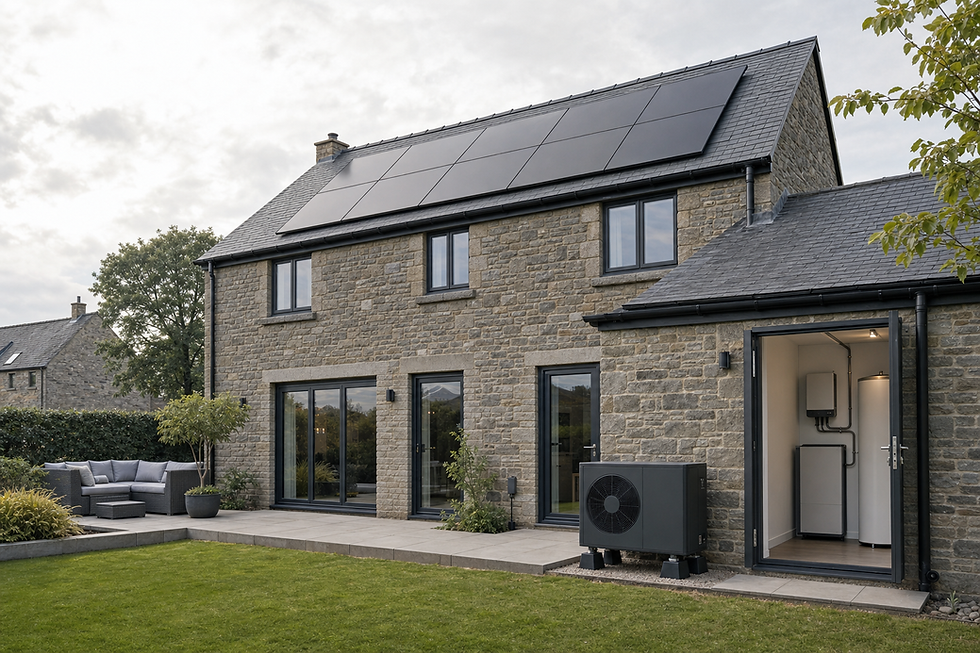
A joined-up plan with room to grow
One property assessment
We consider your roof, heating system, electricity use and available space.
Balanced equipment sizes
We avoid oversizing one component without checking how the others perform.
Practical staged upgrades
We can prepare today's installation for technology you may add later.
Make separate technologies work as one
Solar panels generate electricity during daylight hours. A battery can hold unused generation for later, while a heat pump uses electricity to provide heating and hot water. The equipment only works well together when each part suits the property. We assess electricity use, heating demand, roof suitability, available space and existing equipment before recommending an integrated renewable energy system. That gives us a sound basis for choosing capacities and planning how power should move between generation, storage, household demand and heating.

Plan for real use throughout the year
Summer solar output and winter heating demand don't neatly match, so we set realistic expectations from the start. Grid electricity will still have a role, especially through darker periods or when heating demand rises. We coordinate controls and equipment sizes to improve self-use without pretending a property can ignore the seasons. If installing everything together isn't practical, we can design the first stage so a battery, heat pump or solar array can be added later with fewer awkward changes.
Frequently asked questions
Does an integrated system remove the need for grid electricity?
No. We design the system to use more solar generation and stored power, but seasonal output and household demand still vary. Grid electricity remains useful when generation is low, the battery is empty or heating demand is high.
Can we install the technologies in separate stages?
Yes. We can begin with the technology that suits your current aim and plan connections, controls and capacity with later additions in mind. A survey helps us identify what should be prepared during the first stage.
How do we decide which equipment sizes are suitable?
We review electricity use, heating demand, roof potential, space and existing equipment. We then match the parts so generation, storage and heat pump demand are considered together rather than sized in isolation.